Kathmandu stupa visits: choose Swayambhu or Boudha first
Compare a hilltop approach with a stupa-area outing, leaving transport and worship space in the plan.
Plan this outing
- Swayambhu option
- Hilltop visit with the approach checked first.
- Boudha option
- Stupa-area time and a nearby break.
- Both options
- Use separate sessions if each is a priority.
Independent desk-researched guide. Official references consulted on 10 October 2026. Suggested sequences and time budgets are editorial planning choices, not firsthand-tested routes; check current operator information before booking.
| Decision | Suggested approach | Confirm before departure |
|---|---|---|
| Swayambhu | Compare stair and road approaches | Actual drop-off and remaining walk |
| Boudha | Give the stupa area time | Entrance and worship rules |
| Transport | Agree the return collection | Waiting arrangement and fare |
For a first stupa visit in Kathmandu, choose Swayambhu or Boudha as the main outing rather than assuming both belong in the same morning. The difference is not simply which photograph you prefer: consider the approach, the setting and how much movement your group wants before arranging transport.
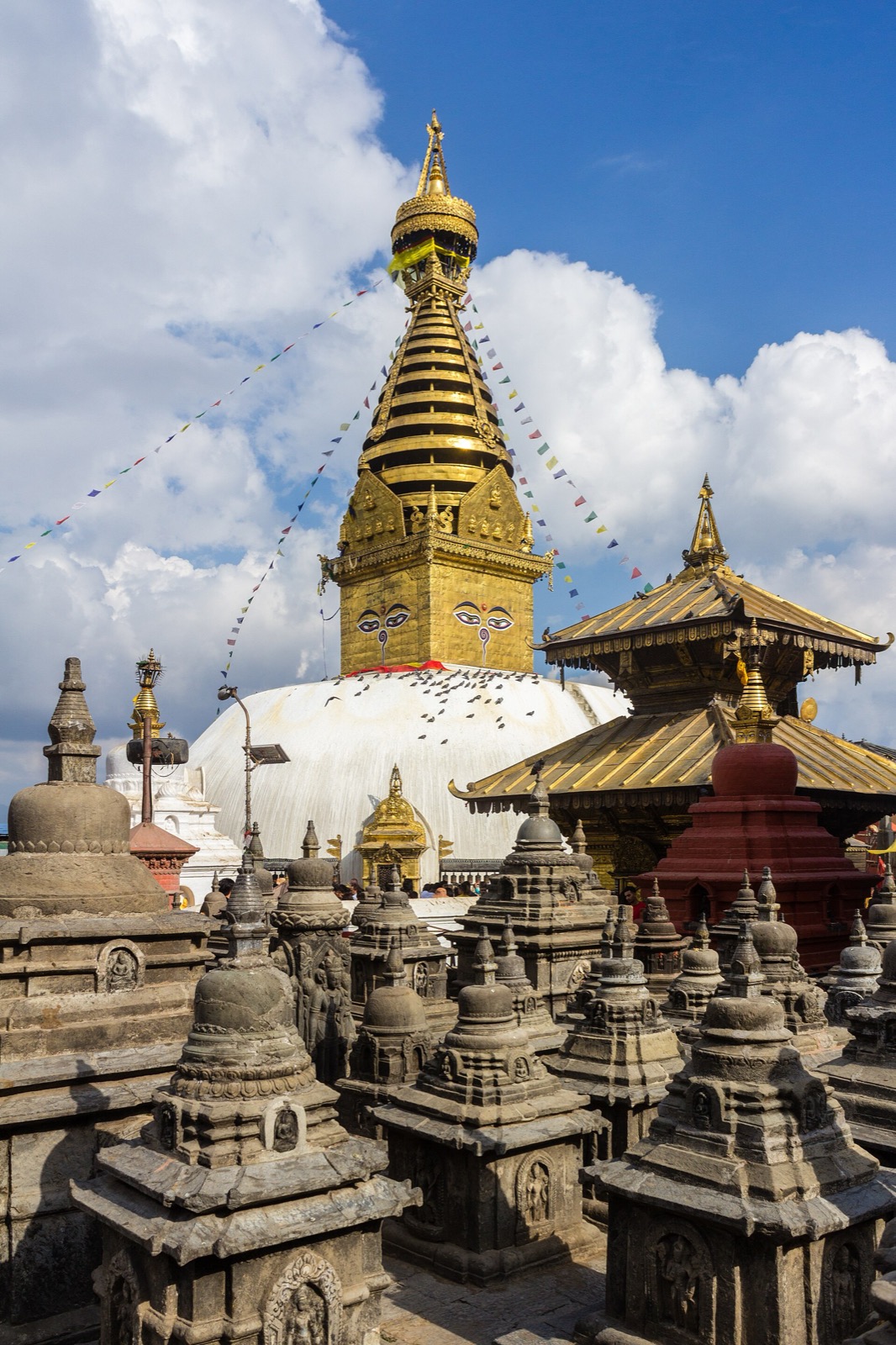
Swayambhu requires an approach decision
Nepal Tourism Board describes Swayambhu as a hilltop Buddhist site and identifies a steep stair approach as well as a road approach near the top. Ask about the current drop-off and remaining walk before selecting transport, particularly when stairs are a concern. A road approach does not by itself certify a step-free visit.
Build the outing around time at the site rather than a race to the viewpoint. Follow instructions near shrines, keep worship areas clear and ask about photography where it is not obvious. Leave enough energy for the descent or return walk and agree a pickup point that you can identify again.
Boudha offers a different kind of attention
The tourism board identifies Boudha as a major stupa in Kathmandu. For this outing, give the stupa area time on its own and leave a nearby meal or tea break flexible. Before joining a circulation path, observe how worshippers move and follow the locally indicated direction and visitor rules.
Look up the current entrance arrangements rather than carrying a fee from an old article as a promise. Shops and cafés nearby are separate businesses with their own menus and opening patterns. Choose one that meets your needs on the day; a rooftop image online does not establish access or a reserved table.
Use a two-outing plan when both matter
If both places are priorities, give each its own session and compare transport from your actual accommodation. Traffic and the approach to each entrance can change what fits comfortably. Do not buy another activity solely because an estimated drive time appears short on a map.
Tell a driver the site name and the collection location, and agree whether the service waits or returns later. Keep cash needs, admissions and transport in separate budget lines. This is a cultural city-outing guide, not trekking or altitude advice; mountain travel needs separate planning. Finish near a reliable onward connection rather than letting the final stop dictate an uncertain journey back.
Good to know
- Keep worshippers’ movement unobstructed.
- Confirm individual venue access rather than assuming all nearby religious spaces welcome entry.
Common questions
Is the road approach guaranteed step-free?
No. Ask about the current drop-off, surface and remaining approach for your own needs.
Does this plan include a trek?
No. It covers cultural visits in Kathmandu; trekking needs separate specialist preparation.
In this guide
Swayambhunath
Hilltop religious visit; ask about the current stair or road approach and the remaining walk from drop-off.
Boudha Stupa
Give the stupa area its own session. Check entrance arrangements and leave worshippers room to circulate.