Downtown Yangon: plan a small architectural outing
Choose a short public-street route and confirm the current travel and access situation.
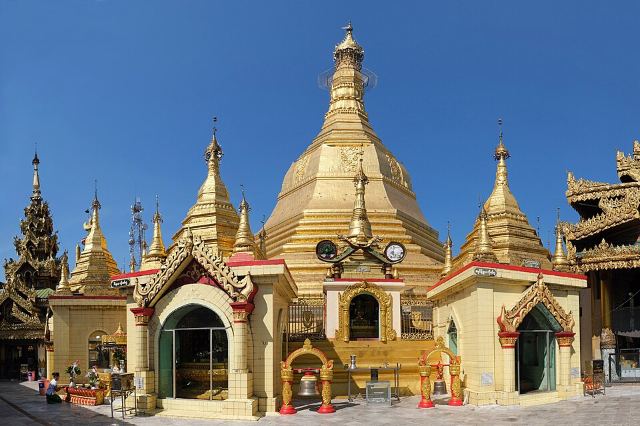
Is downtown easy to navigate?
Yes. The streets form a grid, and the narrow north-south ones are numbered. Sule Pagoda is visible from many corners and makes a reliable landmark.
An architectural outing should have a clear purpose and a modest boundary. Use one street segment and a few buildings as orientation, rather than treating the whole downtown grid as a carefree circuit. Exterior viewing and interior admission are separate activities.
Read current official travel advice before considering a Yangon visit. The heritage references explain buildings and neighbourhood context; they do not establish today’s security, access or transport conditions. Save a return arrangement and avoid relying on an old walking time.
Check travel advice before planning a walk
Read current official Myanmar travel advice, entry requirements and local restrictions before deciding to travel. The linked FCDO advice includes restrictions affecting parts of the country and notes that insurance can be affected by travelling against its advice. It is one government’s advice; also consult the authority relevant to your nationality.
This route is background reading, not confirmation that access, transport or security conditions are suitable today. Confirm local arrangements with your accommodation and relevant authorities; do not infer safety from a familiar street grid.
What you will pass
Sule Pagoda sits in a roundabout that the city's planners made the centre of their grid. Beside it are City Hall, completed in 1936 with Burmese-style tiered roofs on a colonial frame, and the park that holds the Independence Monument. Across the park stands the red-brick High Court with its clock tower, finished in 1911.
Pansodan Street runs south from here towards the river and was the business address of colonial Rangoon. Its banks, shipping offices and trading houses are still standing, some restored and some in gentle decay. Pavement booksellers spread second-hand books along the lower end.
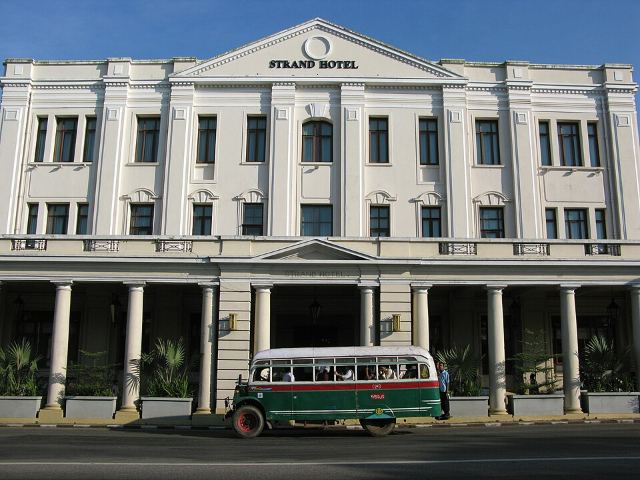
On Strand Road, facing the water, are the Strand Hotel of 1901 and the old customs and port buildings. A few blocks east is the Secretariat, the vast former seat of government where the independence leader Aung San was assassinated in 1947.
Why so much has survived
Downtown Yangon has one of the largest collections of colonial-era buildings in Southeast Asia. Decades of isolation meant there was little money to knock them down. A local conservation group, the Yangon Heritage Trust, has put blue plaques on many of the most important ones, and reading them as you go turns the walk into a history lesson.
Practical notes
Start by 7.30am, when the streets are cool and the tea shops are full. Pavements are broken in places and often blocked by stalls, so you will spend some of the time walking in the road. Watch for open drains.
Keep observations separate from access claims
A building can be interesting from the street without being open to visitors. Do not enter simply because another guide mentions its history. If an interior matters to the outing, confirm permission and opening arrangements with the responsible operator first.
For a shorter plan, choose one public stretch and a confirmed seated stop. Adding a market requires its own current schedule and journey. When current information is missing, keep the guide as architectural background instead of turning it into a promised visitor route.
Good to know
- The whole route is about three kilometres and takes two hours with stops.
- Carry water and wear a hat. Shade is limited after 10am.
- Ask before photographing people, monks and anything official.
- Check current travel advice for Myanmar before making plans.
Common questions
Can I go inside the old buildings?
Public access varies by building and current restrictions. Confirm directly; a historic landmark or working office is not automatically open to visitors.
Where can I stop for a break?
Pavement tea shops are on almost every block. For air conditioning, the cafe at the Strand is the traditional choice.
Is it safe to walk?
This guide cannot establish current safety. Read official travel advice and local restrictions before deciding whether to travel or walk, and check conditions with your accommodation.
In this guide
Sule Pagoda
A downtown heritage and orientation listing. Cultural background does not establish current visitor access or the suitability of a wider walking route.
Bogyoke Aung San Market
A market listing to confirm for the businesses and goods you want. Historical shop counts and names do not establish present trading or visitor access.
Hours: 9am to 5pm, closed Mondays
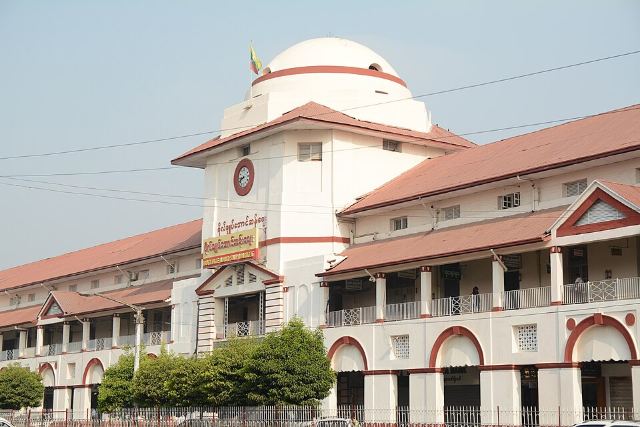
The Strand
Research the specific hotel or dining product before making plans. The building’s history does not confirm café admission, serving times or an afternoon-tea offer.