Yangon tea-shop orders: milk tea, mohinga or Shan noodles?
Understand the drink and meal before choosing a business, with a named-shop enquiry and current travel advice kept separate.
Plan this outing
- Drink
- Ask about the standard tea and the exact adjustment you want.
- Meal
- Choose one bowl or an individually ordered snack.
- Venue
- Confirm the actual branch, not just the brand.
- Travel decision
- Read current official advice and establish local arrangements.
Research updated 19 October 2026. Regional tourism descriptions are attributed as published information, not inspections. No current shop price, hygiene assessment or on-site tasting is claimed.
| Choose | Purpose | Check first |
|---|---|---|
| Milk tea | A seated drink break | Recipe and sweetness |
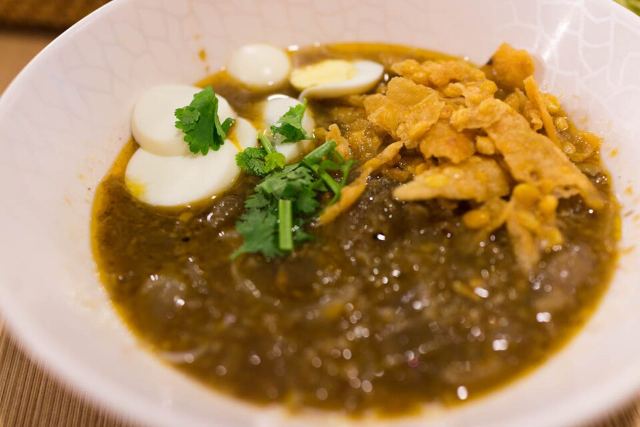
| Mohinga or Shan noodles | A main meal | Broth, toppings and portion |
| Named teahouse | A business enquiry | Current branch operations |
Choose the meal and the drink as separate decisions. For tea, begin with the shop’s standard laphet-yei and ask how sweetness or milk can be changed. For food, decide whether you want a bowl such as mohinga or Shan noodles, or only a snack. You do not need to order every item put on the table.
Yangon’s regional tourism committee provides tea vocabulary and named teahouse listings. Those references help you ask more precise questions, but they do not establish today’s business operations or assess travel safety. Read current official travel advice before considering the outing; our comparison is research, not a personal tasting.
Use a tea name to begin the conversation
The regional guide calls the normal preparation pone-mhan, describes cho-kya as sweet and strong, and pawt-seint as a lighter, creamy style. Use those names as a starting enquiry rather than assuming identical recipes across businesses. Ask for the particular change you want, especially if you are trying to reduce sweetness.
Milk tea and fermented tea-leaf dishes are different products. If dairy ingredients matter, ask what the cup contains before ordering. A word translated as “light” does not establish an ingredient exclusion, a caffeine quantity or a nutritional claim.
Choose a bowl or a snack rather than a complete tasting list
The regional food guide treats mohinga and Shan noodles as distinct comfort-bowl choices. Begin with the dish you actually want and ask what is included in that serving. If you want a small tea break, ask whether the available snacks can be ordered individually instead of assuming that a displayed plate is complimentary.
For any ingredient restriction, discuss the broth, sauces and preparation as well as the visible topping. We do not label a whole cuisine or shop suitable for a dietary requirement. If the answer is unclear, change the order rather than using another diner’s plate as proof.
Use Lucky Seven as a specific enquiry, not a franchise-wide guarantee
The regional committee lists a Lucky Seven branch at the corner of 49th Street and Mahabandoola Road. Save the exact branch you intend to contact. Its presence in a directory is a research lead, not confirmation that the branch will be serving at your arrival time.
A noodle-led meal is a different enquiry from a tea break. Choose the dish you want rather than assuming every teahouse provides the same menu. Confirm the business, entrance, current serving and return before a dedicated journey. One confirmed meal is a complete outing; there is no need to travel between several historical listings.
Keep a useful note about the order you receive
Record the actual cup or bowl, portion, price paid and any adjustment you requested. That is more useful to a friend than calling an entire shop “the best”. If the response or preparation differs from an older reference, send us the guide URL and the specific correction; do not generalise one order to every branch.
Good to know
- Ask instead of guessing about dietary needs.
- Keep transport outside the meal budget.
- Avoid treating a historical listing as a current recommendation.
Common questions
Do listed shops definitely still operate?
No. Historical references need current business confirmation.
How should I choose an order?
Use the available menu, your appetite and direct ingredient questions. Do not rely on a fixed “local” order from a guide.
In this guide
Lucky Seven
A tea-shop research starting point rather than a current inspection. Enquire about operation, menu, ingredients and the drink preparation you want.