How to sleep on an Asian night train
Fall asleep in one city, wake up in another.
How far ahead should I book?
Check when your chosen service opens for booking, then reserve a suitable berth once your dates are firm. Availability varies; a few days ahead is not guaranteed.
A sleeper can combine a long-distance journey with overnight accommodation, but whether it saves time or money depends on your route, fare and sleep needs. Use Bangkok–Chiang Mai as a starting point and compare current services before booking.
Book a lower berth if you can, bring a jumper for the air conditioning and pack your own supper.
Bangkok to Chiang Mai, step by step
Check the State Railway’s booking system for the actual train number, departure station, arrival time and berth class. Train timings and departure arrangements are service-specific; use the information on your ticket.
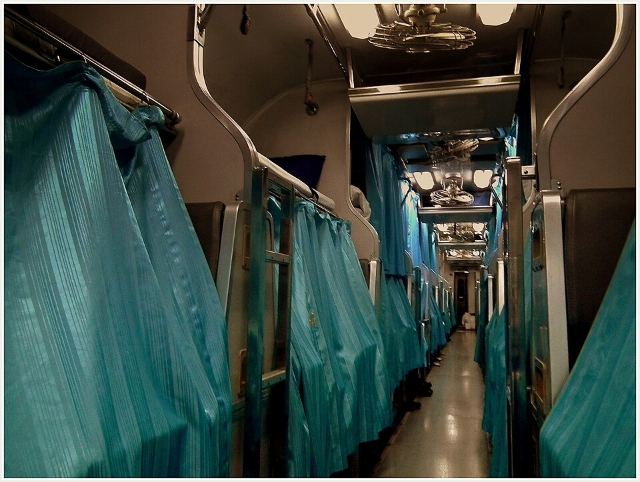
In second class, the carriage is laid out with pairs of facing seats. After departure an attendant converts each pair into a lower berth and folds an upper berth down from the wall, then makes both up with sheets and a curtain. First class has private two-berth cabins.
Choosing a berth
The lower berth is wider and has the window, and costs a little more. The upper berth is narrower, closer to the lights and the air conditioning, and has no view. Tall travellers will be happier below.
Food, drink and sleep
Check the operator’s current food, drink and carriage rules. Pack food that is permitted and easy to carry, a warm layer and an eye mask if you need them. Do not assume a dining service or power socket is available in your booked carriage.
Other routes to consider
Treat other international routes as separate research projects. Confirm the actual service, border formalities, booking channel and transfer arrangements with the relevant operator before comparing them with a Thai domestic sleeper.
Good to know
- Book ahead for weekends and holidays. Lower berths sell out first.
- Keep valuables in a small bag beside you in the berth.
- Bring a power bank. Sockets are limited.
- Trains often run late. Do not plan a tight connection on arrival.
Common questions
Is it safe to travel alone?
Consider the booked carriage, your comfort and current operator arrangements. Ask about assistance and any dedicated carriage options directly; this guide does not guarantee availability or personal safety.
Are there washing facilities?
Check the facilities for your exact carriage and class. A shower or other facility described for one train may not be present on another.
What about luggage?
Check the operator’s allowance and available storage for your class. Pack valuables where you can keep them with you, and avoid obstructing aisles or exits.
Why not just fly?
Compare the total fare, airport or station transfers, luggage charges, accommodation implications and arrival time. A sleeper is not automatically the same price as a flight or a substitute for a comfortable hotel night.