Hanoi beyond the Old Quarter: choose your cultural afternoon
Compare the Temple of Literature with the Vietnamese Women’s Museum, then give one place time instead of chasing both.
Plan this outing
- Best choice
- Temple for architecture and education; museum for social history and material culture.
- Time to allow
- Our suggestion: 2–3 hours for one principal visit, transfers and a break.
- Budget
- Check current admission directly; add transport and refreshments separately.
The additional or replaced source-linked sections were researched on 19 October 2026. Other operational references keep their stated dates and limits. This is independent desk research, not a firsthand visit; routes, comparisons and time allowances are editorial suggestions.
A second Hanoi outing can add context to the streets you explored on your first day. The useful question is not how many monuments you can collect, but which kind of story you want to spend time with. Our suggestion is to choose either the Temple of Literature or the Vietnamese Women’s Museum as the main visit, with a break afterwards.
Vietnam Tourism links the temple to the city’s educational history and describes the museum through artefacts, costumes, crafts and personal accounts. Those are different subjects, not interchangeable attractions. Use the comparison below to decide which fits your interests; this guide does not claim a personal inspection of either collection.
Choose the temple for architecture and education
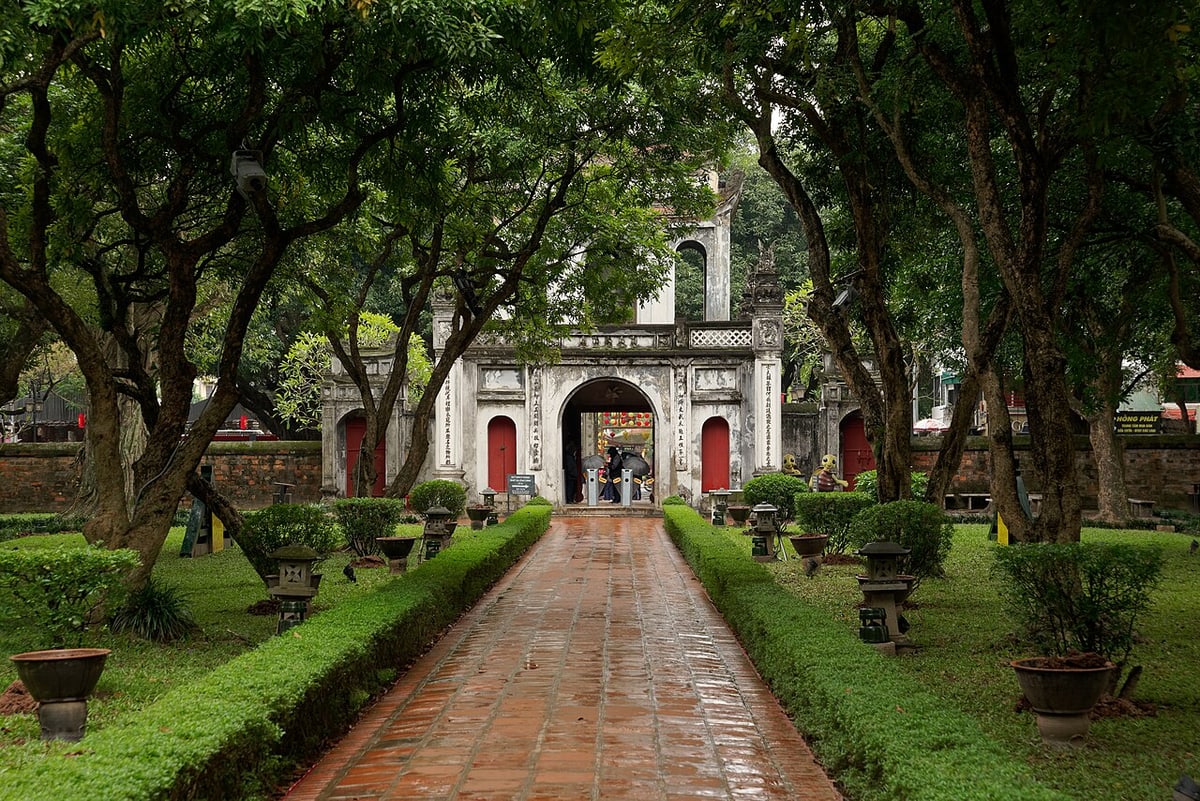
The Temple of Literature, also called Văn Miếu, was established in 1070 and became associated with the university Quốc Tử Giám in 1076. Its courtyards and scholarly records make it a useful choice if you want an architectural setting as well as historical context.
Our suggestion is to allow 60–90 minutes inside, then pause before deciding whether to go elsewhere. Read the interpretation you find rather than treating the courtyards simply as a sequence of photographs. This is an editorial allowance, not a measured visit duration.
Choose the museum for people and material culture
The Vietnamese Women’s Museum offers another way into the country’s history and society through objects and personal accounts. If you prefer reading exhibition interpretation to walking through an architectural complex, make this your principal stop.
Pick two subjects that interest you and give them attention rather than trying to absorb every label. Leave time to compare objects, photographs and the stories accompanying them. If your group reads at different speeds, agree on a meeting point instead of hurrying each other through the rooms.
Keep the two locations separate in your plan
Do not assume this comparison is a short walking circuit. Save the address of the venue you choose and plan the journey from your accommodation. If you later add the other venue, include the transfer as a separate part of the outing.
The linked tourism overview contains admission and schedule information that may be older than current venue arrangements. We use it for cultural background and do not carry those prices into a guaranteed present-day budget. Check the venue’s current notice before making a special journey.
Turn the visit into a useful afternoon
Reserve a little time afterwards to talk over one object, courtyard or historical detail you remember. A café break gives the visit an ending without automatically turning it into another sightseeing stop. For a shorter outing, keep only the principal venue and the journey home.
For costs, separate admission, local transport and refreshments. Ask about visitor categories and any booked activity rather than assuming a general entry price includes a guided tour. If you are short of time, comparing the subjects in advance is more useful than buying two tickets and rushing both.
Five courtyards or a collection about women’s lives?
Vietnam Tourism describes the Temple of Literature through five courtyards and the educational history of the temple and Quốc Tử Giám. The Women’s Museum, at 36 Lý Thường Kiệt, presents clothing, crafts, photographs and personal histories. These are different ways of learning about Hanoi: a spatial sequence and institution, or objects and individual lives.
Choose the temple if you want to follow how the courtyards organise an educational monument. Choose the museum if you want to compare what a costume, a photograph and a personal account can each explain. Our recommendation is to make one of those questions the focus, then decide on the second venue after a break. Published historical context does not confirm a temporary gallery or today’s ticket tariff.
Common questions
Which should I visit first?
Choose by subject rather than ranking: temple architecture and educational history, or museum collections about women’s roles and lives.
Are both included in one ticket?
No combined admission is assumed. Check each venue’s current visitor information before paying.
In this guide
Temple of Literature
An option for focusing on architecture and educational history. Choose it for that subject rather than combining every Hanoi interior in one afternoon.
Vietnamese Women’s Museum
Consider this for an object- and story-led cultural visit. Use the current exhibits and museum map to choose a focused route.