Talat Noi: choose a purpose for a slow neighbourhood walk
Public lanes, a few saved landmarks and a café break, without treating working shops as attractions.
Plan this outing
- Best for
- A neighbourhood walk with a café stop and time for street details.
- Time to allow
- Our suggestion: 2–4 hours, with breaks.
- Budget approach
- Budget for drinks, food and transport; private homes, cafés and exhibitions set their own entry terms.
Time allowances and budget methods are Sidestreet planning suggestions, not fixed schedules or guaranteed prices. This is a research-based guide; check venue and transport notices before travel.
| Stage | Plan | Keep in mind |
|---|---|---|
| Arrive | Choose a public street as your starting point | Check the walking route from your station or pier |
| Explore | Use Soi Wanit 2 as an orientation point | Lanes are working residential streets |
| Pause | Choose a café after checking its menu | A purchase does not grant access to private areas |
| Leave | Choose Chinatown or the riverside as your next stop | Check your actual route and last boat first |
Talat Noi works well as a small neighbourhood outing when you decide what you want to notice. Choose street detail, religious sites or a café pause as the main interest. You do not need to connect every photograph you have saved into one route.
Begin with a few map pins and use the public lanes between them. Workshops and homes are places where people work and live; a doorway that looks interesting does not become a visitor entrance. Ask before taking a close photograph and leave space for deliveries.
A little history
Talat Noi means little market. It is one of Bangkok's oldest riverside communities, settled by Chinese traders and by Portuguese Catholics who moved here after the fall of Ayutthaya. The Holy Rosary Church, which locals call Kalawar, was founded by the Portuguese community in the 1780s. The present cream-coloured building dates from the 1890s.
The So Heng Tai mansion, a courtyard house in the southern Chinese style, is more than two centuries old and is still owned by descendants of the family who built it. Today the courtyard holds a deep pool used by a diving school.
A route that works
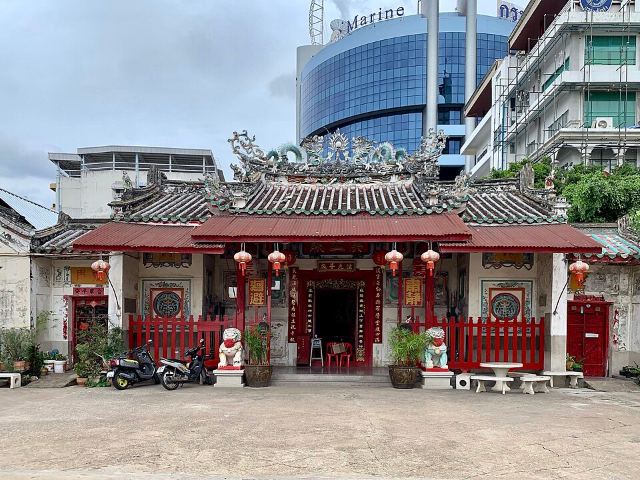
From Hua Lamphong MRT station it is a ten-minute walk to Soi Wanit 2, the lane that runs the length of the neighbourhood. Follow it past the engine-part shops, look in at the small Chinese shrines and turn towards the river whenever a side lane opens up.
The rusted shell of an old Fiat, parked against a wall for decades, has become the most photographed object in the area. Street art is concentrated in the lanes near it.
Remember it is someone's home
Families live and work in these lanes. Keep your voice down, do not photograph people at work without asking, and step aside for the motorbikes and handcarts that have right of way.
Choose two anchors, then leave room between them
A useful small itinerary has a starting point and a finishing point, with one café or cultural stop in between. Save all three on a map before leaving your accommodation. The tourism board’s route includes public lanes and cultural stops; it does not mean every doorway along the way is open to visitors.
If your goal is photography, allow extra time without blocking an alley. Ask before photographing people, workshops or the inside of a business. View a shrine as a place of worship, and follow any posted access and photography notices.
When the afternoon needs changing
During rain, choose an indoor stop that is actually open, or return to a larger public street. Do not assume a workshop or family courtyard is shelter for visitors. For anyone avoiding steps, ask the chosen café or exhibition about access before building the outing around it.
Make the walk your own
Choose one detail to follow: signs, doorways, workshop tools or changes in the streetscape. Taking notes on a few things you notice gives the afternoon a clearer purpose than trying to recreate a social-media route. Avoid recording identifiable people without permission.
When you stop for coffee, look at the route you have actually covered before adding Chinatown. A comfortable seated break can be the finish. Continuing is useful only if you still want the different experience and have time for the journey home.
Good to know
- Go on a weekday afternoon. Workshops are open and the lanes are quieter than at weekends.
- Many cafes close by 6pm.
- River City, a short walk south, has clean toilets and air conditioning.
- The Chao Phraya Express Boat stops nearby if you would rather leave by river.
Common questions
How long should I spend there?
Two hours is enough to walk the main lanes. Allow four if you want to sit in a cafe, visit the shrines and take photographs.
Can I go inside the So Heng Tai mansion?
It is a private family home. Check current visitor arrangements directly; an open gate is not permission to enter or use facilities.
How do I get there?
Walk ten minutes from Hua Lamphong MRT station, or arrive by river boat. Taxis struggle in the narrow lanes, so ask to be dropped on Charoen Krung Road.
Where should I eat?
There are cafes in the neighbourhood itself. For a full meal, Chinatown's Yaowarat Road is fifteen minutes north on foot and comes alive after dark.
In this guide
Talat Noi
A neighbourhood starting point for public-lane exploring, workshop streetscape and a separately chosen café. Working premises and homes are not automatic visitor interiors.
Cost: Free to wander